
Criminal Court Cases in Burke County
Burke County criminal cases are state cases, even when a city police officer made the arrest. District Court hears misdemeanors, infractions, probable-cause matters, and early felony stages. Superior Court is the felony trial court. Both sit within District 36 of the North Carolina General Court of Justice, and the Burke Clerk of Superior Court keeps the public case files for both divisions. Morganton, Valdese, and Drexel do not operate separate municipal criminal courts. Charges from those cities enter the same Burke County docket.
The North Carolina Judicial Branch Burke County hub links court calendars, forms, and local services. A calendar shows a planned setting, not proof that the hearing took place or that a charge ended in conviction. For a reliable outcome, read the case events, disposition, and judgment. The underlying incident narrative remains with the sheriff or police agency that created it, while the court file tracks the prosecution.
Burke County eCourts Smart Search
The North Carolina eCourts Portal is the first remote channel for public Burke County case research. Anonymous users can search without registration. A full party name or case number gives the cleanest start. Select Burke as the location so a common name does not pull cases from another county. If the first query misses a likely record, the Judicial Branch permits wildcards: use at least three letters plus an asterisk for a last name and at least one letter plus an asterisk for a first name.
The official Portal training resources illustrate those controls and the Odyssey case-number format.
That training is useful when a spelling variant, county filter, or four-part case number keeps an otherwise public Burke County court case out of the result list.
North Carolina completed statewide eCourts deployment in October 2025, so Burke County now shares the Enterprise Justice environment used across all 100 counties. Older instructions that send every electronic search to a courthouse terminal may be stale. The terminal still matters for free non-certified viewing, email delivery, legacy material, and clerk help. Portal is the remote starting point, not a guarantee that every document image or older paper file can be opened online.
Burke County Case Record Searches
Use the portal for a fast docket summary, then move to the clerk when certification, a paper pleading, or an older file matters. Search tools can lag, and not every filed document is downloadable. The following sequence keeps a Burke County case lookup tied to one person and one case instead of merging people who share a name.
- Open Smart Search and enter a full party name or complete case number.
- Set the location to Burke and choose Criminal Actions when using advanced filters.
- Repeat the search with supported wildcards or known name variants.
- Open each candidate and compare the middle name, filing date, case type, status, and location.
- Contact the Burke clerk for missing documents, older paper material, copies, or a certified result.
| Field Label | Type | Required | Notes |
|---|---|---|---|
| Search Type | Tab or portlet | Yes | Use Smart Search; other portlets include Hearings and Judgment Search. |
| Search Criteria | Text | Yes | Accepts a party name or case number. |
| Case Number | Text | No | Uses year, case-type letters, sequence, and county identifier. |
| Party Name | Text | No | Try the indexed name and supported wildcard form. |
| Location | Filter | No | Select Burke to remove same-name cases elsewhere. |
| Case Type, Status, Date | Filters | No | Availability depends on the chosen Portal portlet. |
Note: A Portal result is case research, while the Judicial Branch directs an official certified county name search through the clerk.
Decoding Burke County Case Numbers
An Odyssey case number has four useful parts: a two-digit filing year, case-type letters, a six-digit sequence, and a three-digit county identifier. An official example is 21CR000003-910. The letters and filing year help distinguish the record from a civil or special proceeding, while the county segment helps confirm location. Do not infer guilt from the existence of a CR number. It identifies a criminal action, not the outcome.
Once a number is known, use it in Portal and when calling the clerk. It is also the best link between calendar entries, paper pleadings, financial obligations, and the judgment. If an arrest report supplies only an agency report or warrant number, compare the defendant name and event date in Portal, then confirm the match with the clerk. The broader Burke County arrest search explains why the arrest charge may differ from the count later filed in court.
What a Criminal Case File Contains
A Burke County court file follows the prosecution rather than the arrest alone. Public summaries commonly identify the location, filing date, case category, parties, counts, events, and status. A paper file may contain pleadings or orders that are not downloadable. Read the disposition at the count level because one charge can be dismissed while another ends in a plea or judgment.
| Case Number and Court | Identifies the Burke filing, division, case type, and docket. |
|---|---|
| Charges and Counts | Shows the offense description, filed count, date, code when entered, and felony or misdemeanor designation. |
| Docket Events | Tracks settings, continuances, motions, pleas, trial events, and orders that are public. |
| Hearing Dates | Lists scheduled settings, which must be checked against later events to learn what occurred. |
| Disposition and Judgment | Shows how each filed count ended and records the court's final ruling. |
| Sentence and Costs | May show sentence terms, restitution, court costs, attorney fees, and supervision-related obligations. |
A booking entry can be newer, but the case file is the stronger source for the prosecutor's filed charge and the final court result. SBI history is better for fingerprint-supported statewide identity matching.
Burke County Paper Court Files
The Burke County Courthouse is at 201 South Green Street in Morganton. The clerk's public counter is open Monday through Friday from 8:30 a.m. to 5 p.m., and the main number is 828-433-3200. Public terminals can search by defendant name, case number, or victim or witness name. Viewing and emailing results is free; a printing charge may apply. Ask the counter for the paper file when Portal shows a case but no document image.
The official courthouse page supplies the building and visitor details.
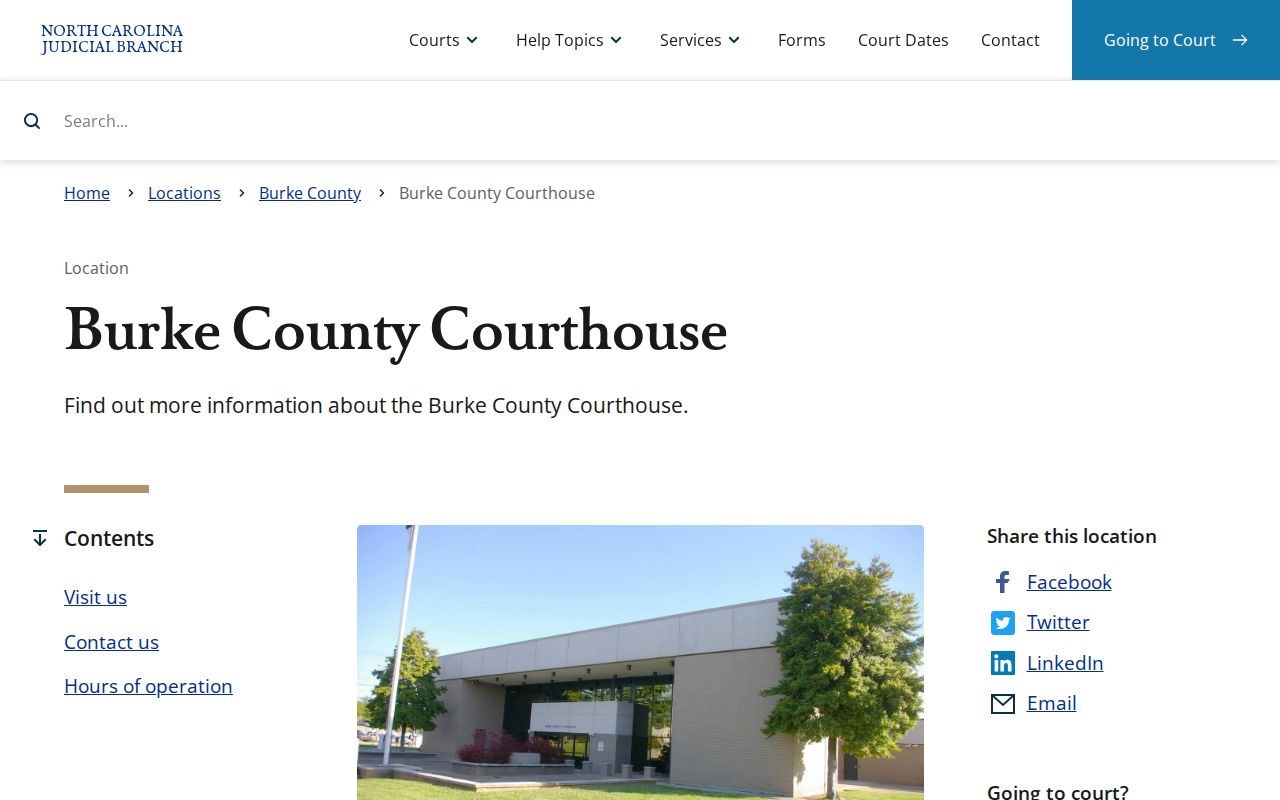
The courthouse is the local point for District and Superior Court files, while police reports and booking data remain at the agencies that made or recorded the arrest.
The Burke court contact directory separates the clerk, judges, District Attorney, and magistrate numbers.
That division matters because the clerk supplies records, the District Attorney prosecutes, and magistrates handle initial process and release conditions within their authority.
Criminal Case Stages in Burke County
A criminal file begins when charging documents reach the clerk. District Court generally handles a misdemeanor to disposition and conducts the first phases of a felony. A felony can move to Superior Court after indictment or waiver. Hearings may be reset, and the docket records those changes. Failure-to-appear and order-for-arrest events may appear in a public case, but Portal is not a real-time warrant confirmation service.
Case flow: Charges Filed › Arraignment › Pretrial › Plea or Trial › Disposition › Sentencing
Each step creates a different kind of entry. A calendar date announces a setting. A plea or verdict addresses guilt. A judgment states the court's result and sentence. When a result is unclear, request the judgment rather than relying on a charge label or a past calendar.
City Charges Enter Burke County Courts
Morganton, Valdese, and Drexel police create their own incident and arrest reports, but their state charges do not remain in a city court system. Once filed, those prosecutions appear in Burke District Court and, for felony trials, Burke Superior Court. Search eCourts with Burke as the location even when the event occurred inside a town. Then contact the city police records unit for the source report.
This two-custodian structure prevents a common mistake. The clerk does not become custodian of an investigative file because a prosecution exists. Likewise, a police report cannot establish the final disposition. Match the report or booking event to the court number, then read the latest judgment. The method provides a clearer timeline from reported event to filed charge and outcome.
Access Rules for Case Records
North Carolina G.S. 7A-109 supports public access to court records, but public does not mean every document is online. Juvenile matters, sealed cases, expunged records, protected victim information, and sensitive identifiers can be excluded or redacted. Older records may remain in paper form. A missing Portal result can also reflect spelling, aliases, a wrong location filter, or reporting lag.
For a law-enforcement record tied to the same event, North Carolina Public Records Law treats basic arrest facts differently from confidential investigation material. Request each document from its creator. The clerk handles the case file; the sheriff or city police handles its report.
Sealed, juvenile, and expunged matters are not ordinary public search results. A record that once appeared can later become unavailable under a court order or statute. When reviewing your own Burke County case, keep the case number and any certified order. Those documents help the clerk or NCSBI trace a public entry that should have been removed or a disposition that did not link to the correct arrest cycle.
Certified Burke County Court Searches
A certified single-county name search uses form AOC-CR-314 and costs $25. The official criminal record search form page provides the current revision.
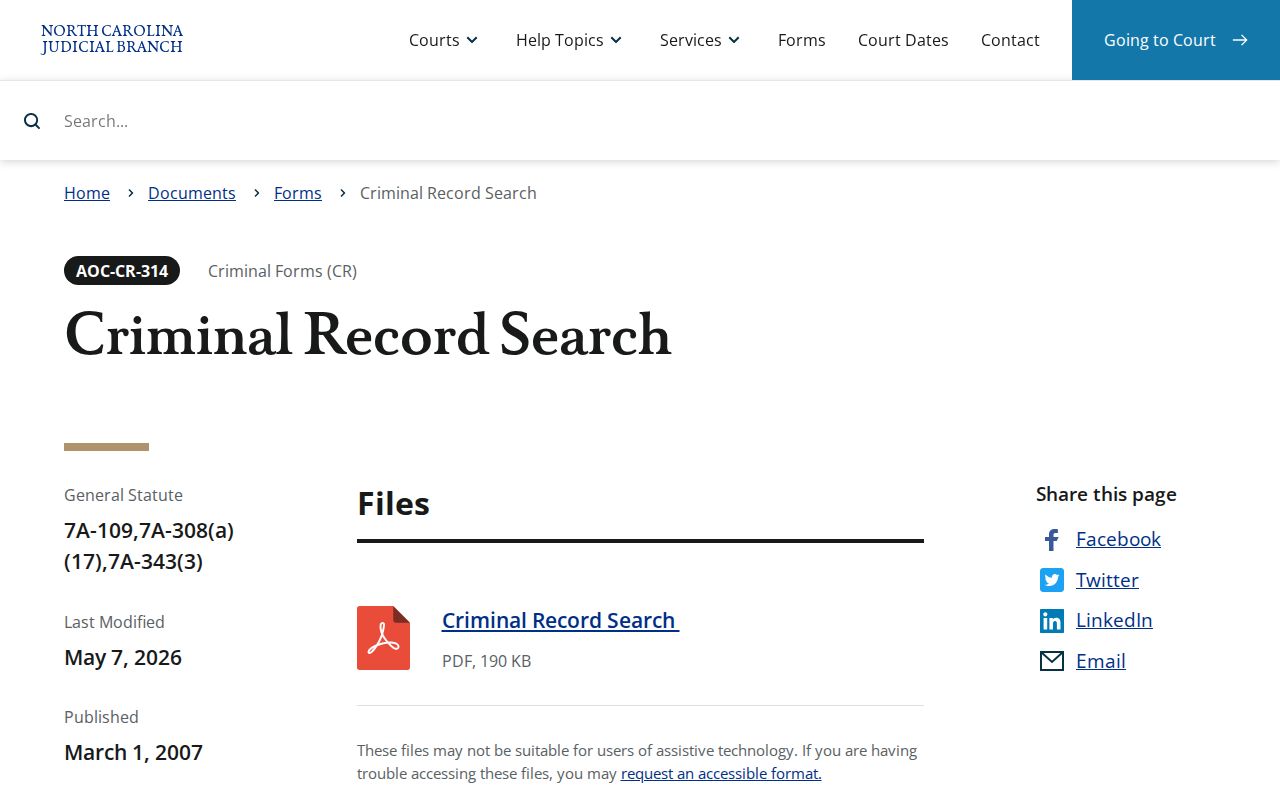
The form and clerk certification answer a different question from a free Portal lookup, so download the current form just before submitting it.
Mail requests go to the Burke clerk with a money order or certified check. Do not send cash or a personal check by mail. In person, the clerk accepts cash, credit or debit with processing fees, money order, or certified check, but not a personal check. Confirm the current mailing ZIP on the form because official sources show different ZIP references for the clerk's post-office box.
The Judicial Branch compares the available certified search, courthouse terminal, Portal, and SBI channels.
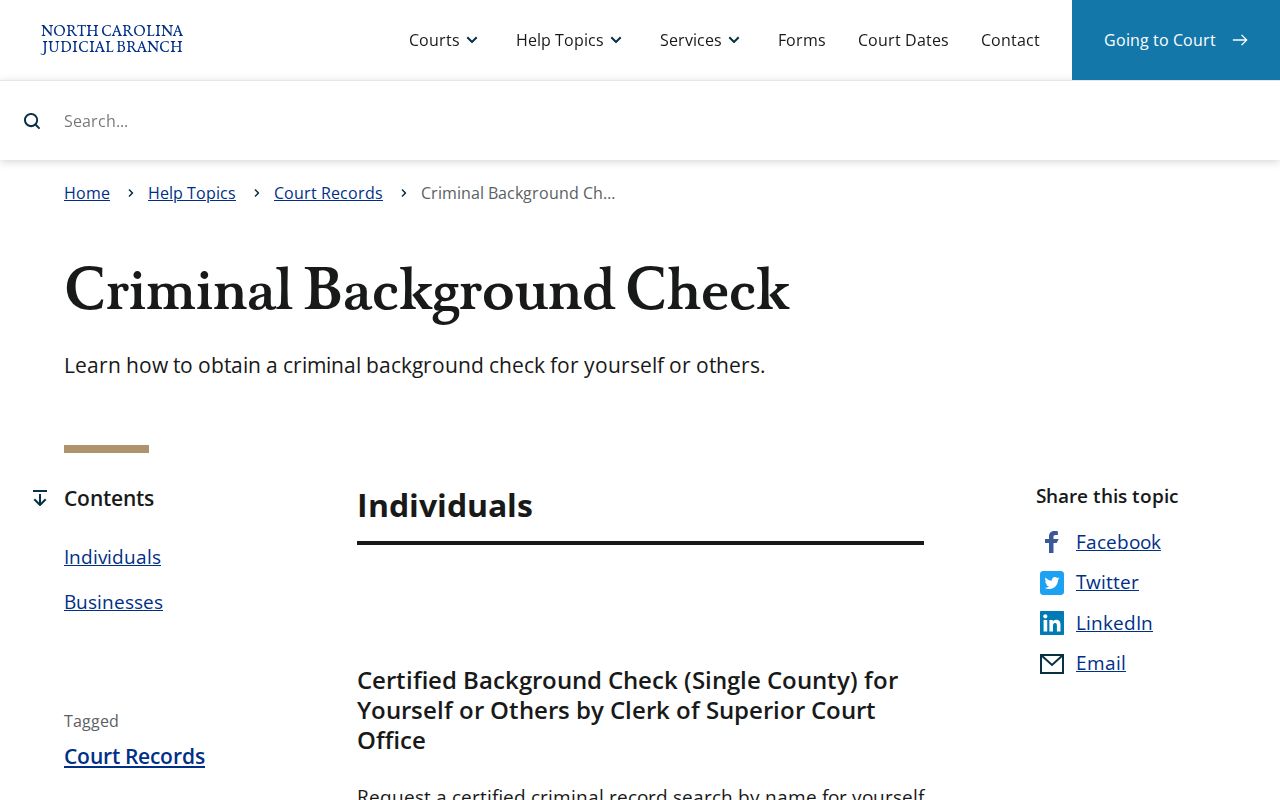
Use the certified Burke search for an official county result, the terminal for a free non-certified view, and SBI Right to Review for your own fingerprint-supported statewide record.